2 min read
What is LOG footage, and why does it matter so much for color grading?
Why does LOG footage look grey and flat, what information does it keep, and how much freedom does it give a colorist? A short, clear guide.
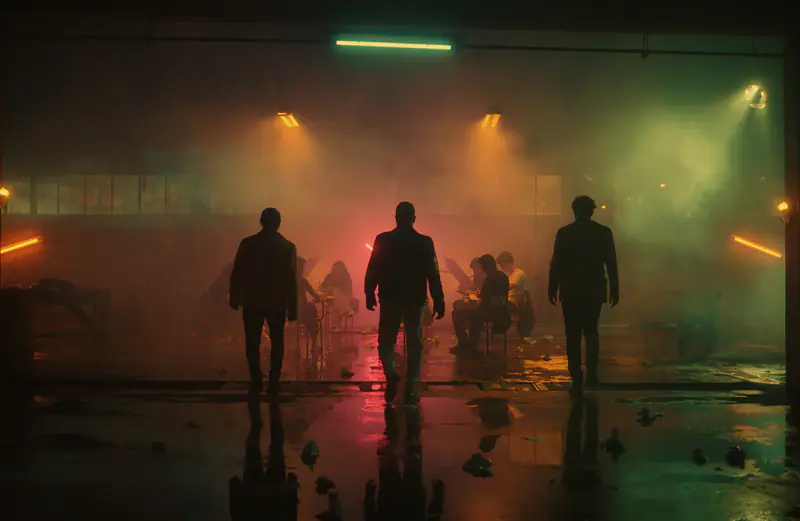
Anyone who walks onto a set for the first time is often surprised by the monitor: the colors are washed out, the contrast is low and everything leans grey. That is not a mistake. It is a deliberate choice. The camera is recording in a format called LOG.
What does LOG mean?
LOG means the camera stores the light captured by the sensor on a logarithmic curve. The human eye responds to light logarithmically rather than linearly, and the LOG curve follows the same logic to fit a wide range, from deep shadows to bright highlights, into the file.
The result: the image looks flat and lifeless on screen, but it carries far more information than a standard video recording.
Why does it look grey?
Because LOG footage is designed to be processed, not watched. Contrast is kept intentionally low so highlights don't clip and shadows don't crush. Saturation is limited for the same reason.
During grading, this "raw" image is first transformed into a broadcast standard such as Rec.709. Contrast and color only come back after that step.
What does it give the colorist?
- Detail: Clouds in the sky, light pouring through a window or texture in a dark corner are preserved.
- Flexibility: Warmth, contrast and tone can be reshaped while designing the look without breaking the image.
- Consistency: Shots filmed at different times of day or under different light are far easier to match.
LOG carries the decisions that weren't made on set into post-production. That turns color grading from a rescue job into a creative process.
Should every project be shot in LOG?
For most series, feature films and commercials, yes. But LOG has a cost: exposure has to be right, and the footage must go through a professional grading process. For some fast-turnaround social content, recording straight to Rec.709 can make sense.
The decision should be made before the shoot, by the cinematographer and the colorist together. Which camera profile, which lighting conditions, which look are we aiming for? The earlier that conversation happens, the better the result.
See it for yourself
The easiest way to understand how LOG footage transforms is to follow a single frame step by step. On our What is color grading? page you can follow a frame from LOG to the final grade, and in Grade Lab you can do the same transformation yourself.